Moose Season
Changes of latitude then and now

Note: This is a story I wrote and submitted to a travel writing competition back in November. I guess it’s not precisely travel writing, though the assigned theme was “a hasty exit” and I believe this story meets that requirement.
It’s from my life at the end of the eighties, when I was in my mid-thirties, the prime of life. There’s also quite a bit of movement between latitudes.
Speaking of latitudes, I’m leaving for a trip to the southern continent, and I’m not certain I’ll be posting regularly in February. So, here’s one for the road. Please enjoy, and thank you for reading.
And if, like me, you’re preoccupied and terrified by the present dystopic moment, skip this story, and read Erin Kissane’s Ursula’s List. If you’ve never heard of or read Ursula Franklin, Erin’s post is a perfect touchstone for this moment.
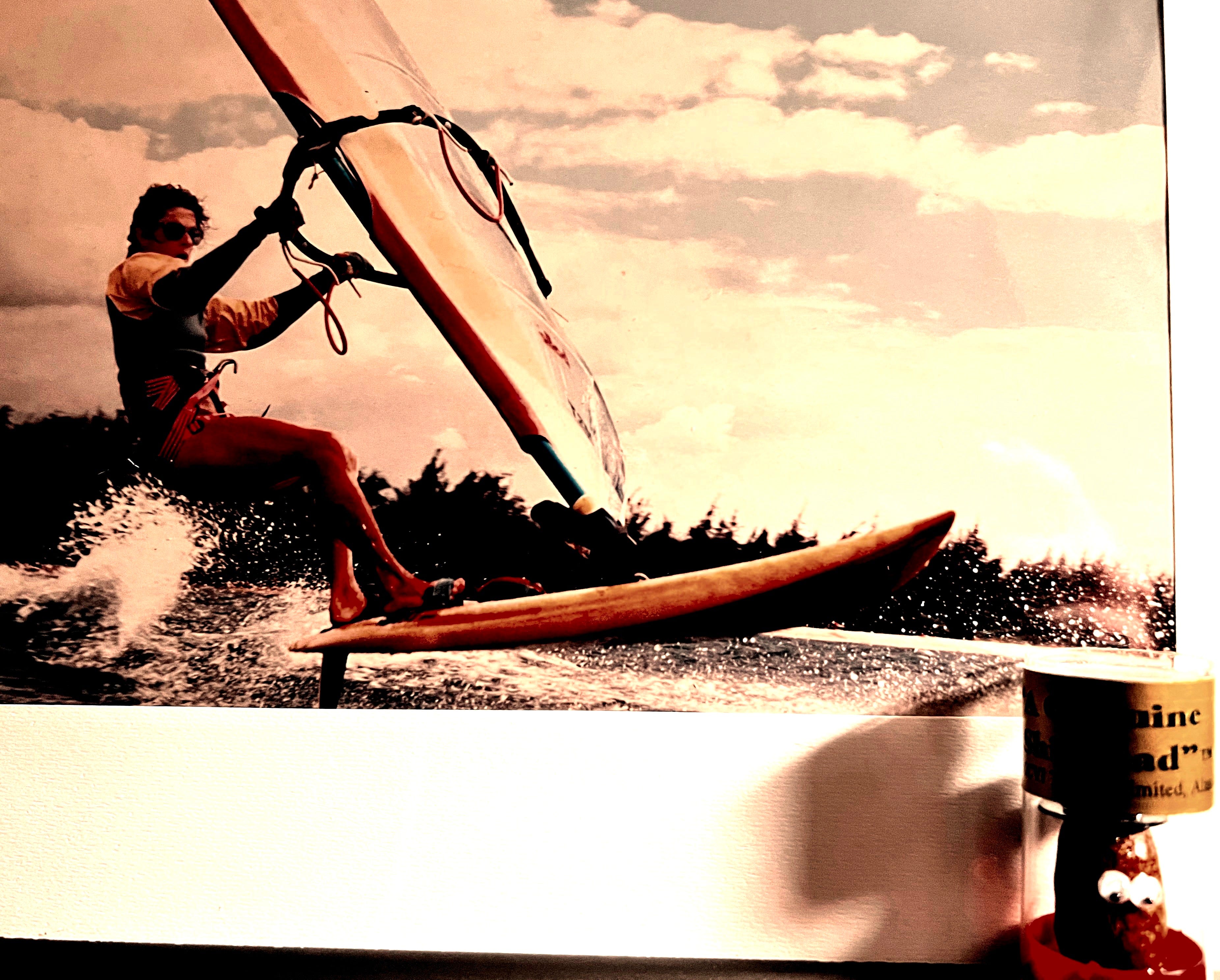
I left Maui for Alaska in mid-September, after the Hawaii State Slalom Championships ended. It was my first and last windsurfing competition, and I managed to place, but only just. My only athletic trophy ever: a plaque that fits in the palm of my hand, that I’ve treasured for decades.
There were seven women in my age division that year, and I finished sixth. Lucky for me, the iconic women sailors of the day, like defending champ Debbie Brown, a local powerhouse and fearless wave-rider, were in the over-35 bracket. I was a tad younger.
After four epic years on the Big Island, I’d loaded my sailing gear and belongings into the bed of the clean tangerine king-cab Nissan pickup, and driven it to the barge at Kawaihae Harbor, a small inter-island shipping terminal in the dusty armpit of Hawaii’s Kohala coast.
A week later, in early March, after the spring rains let up on Maui, we picked up truck and belongings at Kahului, the Valley Isle’s main port.
My fiancé worked construction and paddled canoe. We’d met on the beach, under the spreading kiawe tree. There at the far end of Anaehoomalu Bay, Big Island sailors talked story as they waited for a puff of air, and the Waikoloa Canoe Club team took their koa outrigger down to the water at the close of the day.
B. was broad-shouldered and copper-toned, with light blue eyes and muscled limbs. Back home in Alaska he was a land surveyor and woodsman, sure-footed and strong. I was drawn to the idea of life on the Last Frontier. But first we would make a six-month stop on Maui, where I could windsurf the trade winds that came reliably to the north shore in the summer.
We’d found a poky rental house in a Pukalani subdivision, up the road from my friend Claudia’s homestead, close to the ageless Pukalani Superette, and twenty minutes from Kanaha, the public beach where I loved to sail.
B.’s job was across the valley on the dry west side, a tedious commute. They were laying out a golf course in abandoned pineapple fields north of Lahaina. B. was a short-timer in the islands, a musher who’d sold his dog team, and set out for a change of climate and a big paycheck. Our plans had come together quickly. My biological baby clock was ticking, and I was focused like an athlete.
To make a living on Maui, I cobbled together three part-time jobs, and gave myself time to sail on weekend race days and afternoons when the wind filled in. Twice a week, I packed tropical flowers for a grower in Kula who sold to the mainland: gingers, heliconias, and anthuriums from Haiku; mountain-grown proteas and pincushion banksias from his own orchard. Three fit wahines in the camaraderie of the packing shed: slinging shipping boxes, singing along to Bob Marley on a boombox.
Two or three evenings weekly I worked the hostess stand at the Hali'imaile General Store, a stylish new restaurant in a sleepy little sugar town. It’s still there: a destination eatery with a wraparound plantation-style lanai, the creation of a celebrity chef and her Hollywood husband.
On Saturday nights, I sold flowers locally. I’d collect a giant basket of long-stem roses and assorted flower leis from a vendor in Makawao, and make the rounds of restaurants and bars all over upcountry, down to Paia, and on to Kahului and Wailuku. I’d start before sunset and finish after midnight — driving down the slope of Haleakala, stopping at dozens of spots. I sold flowers to tourists, locals, cowboys, b-girls, and drunks. Drinking men, buying flowers to please their wives and dates, were pretty good tippers.
The three gigs put gas in my pickup, bottled beer in my six-pack cooler, and spam musubi in the fridge. Sand between my toes, flowers in my hair, and the dream of living off the land in a pristine place I’d never seen. And no time to think about the life of my own I was leaving behind.
Moose season in the Matanuska Valley usually runs for a few weeks in September. B. quit his job before Labor Day. He couldn’t wait to get back to Alaska. The autumn equinox was racing toward us. Then winter.
The day I arrived it was overcast and cold. I saw a moose by the side of the road, and mistook it for a mule. We laughed.
In Wasilla, the indoor high school swimming pool had a mural of dolphins and sea turtles painted on the cinderblock wall. Behind my goggles, there were tears in my eyes. I should have bailed then and there, but I didn’t.